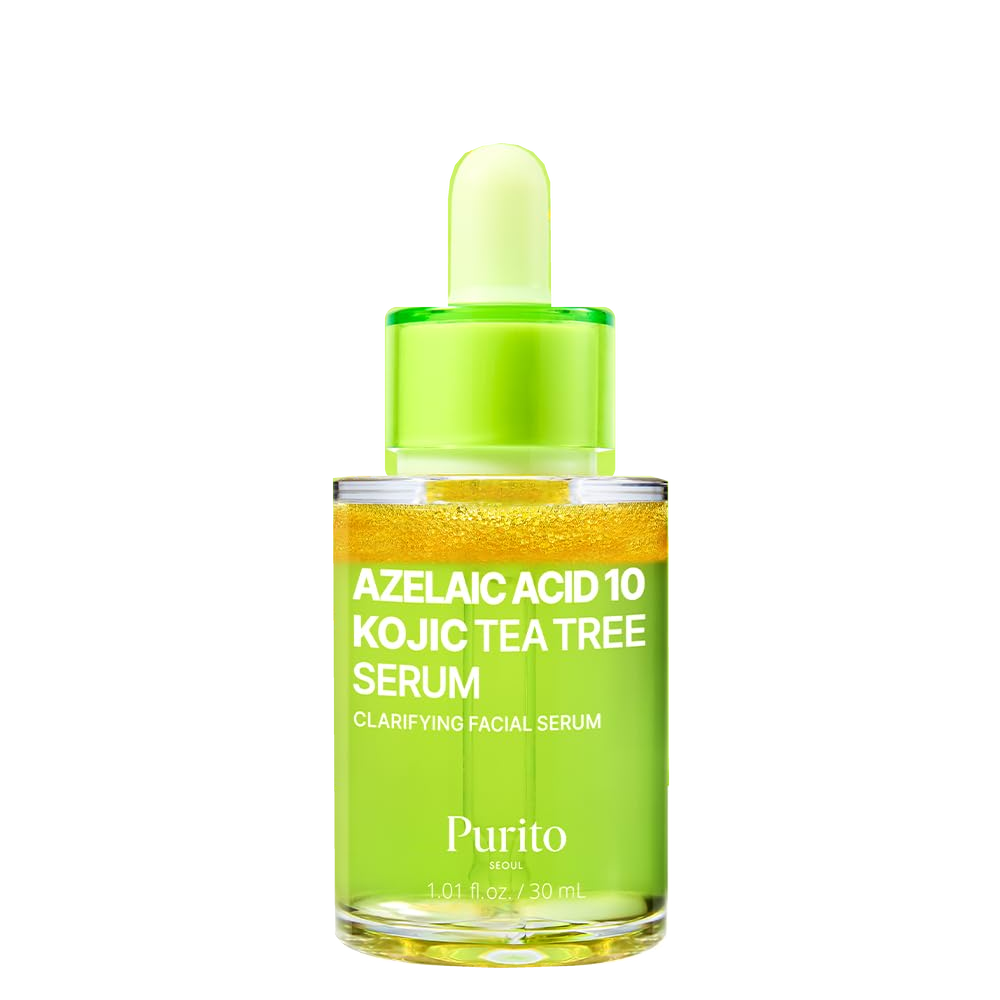
A 30 mL serum with 10% azelaic acid and 10% tea tree leaf water, plus kojic acid and a smaller amount of tea tree leaf oil. The brand’s “20% Triple Active” wording does not mean 20% azelaic acid.
Consider it if you want a serum listing 10% azelaic acid and are comparing the complete formulas and directions with other products. Its 10% tea tree leaf water is distinct from the separately listed tea tree leaf oil at 50 ppm.
Based on brand information and published sources, not a hands-on review.
01 / TEXTURE
What the product image shows
Brand description
A capsule-containing serum that the brand directs you to shake before application. The product image shows a closed bottle; it does not show how the serum feels or wears.
03 / YOUR ROUTINE
How to use it in your routine
Official directions
Gently shake three to five times, spread evenly over the face, and pat gently. Purito's FAQ places the serum after toner and before cream. The US page does not state a daily or weekly frequency; follow the directions on the package.
For external use only. Purito advises avoiding the eye area and not applying it to broken, wounded, or irritated skin. Keep out of reach of children. It recommends a patch test before first use, sunscreen while using the product, and stopping if rash, redness, or itching occurs; consult a doctor if irritation persists. Consult a doctor before use during pregnancy or breastfeeding. These are the brand's cautions, not an assessment of individual suitability.
The formula lists 10% azelaic acid and 10% tea tree leaf water. It separately lists kojic acid at 1,000 ppm and tea tree leaf oil at 50 ppm. Leaf water and leaf oil are different ingredients; the amounts use different units and should not be added together or described as 20% azelaic acid. The brand's '20% Triple Active' phrase does not change the ingredient amounts shown on the product page.
How should you apply it?
Purito says to shake the serum three to five times to disperse the capsules, apply evenly to the face, and pat gently. Its FAQ places it after toner and before cream. The US page does not state how often to use it; follow the directions on the package.
How does it compare with Anua?
Both products list 10% azelaic acid. Anua's official formula also lists panthenol, betaine salicylate, glycerin, sodium hyaluronate, niacinamide, and centella-derived ingredients. Anua describes gradually increasing frequency; Purito's US page gives application steps but no frequency. These are label and direction differences, not comparative results or a product ranking.
Does “no synthetic fragrance” mean no aromatic oils?
The official page uses “No Synthetic Fragrance,” while its full list separately names tea tree leaf oil at 50 ppm. Leaf water and leaf oil are different ingredients. If tea tree oil is something you avoid, use the full label rather than the front-of-page claim when choosing.
Selected ingredients · linked English product listing
Ingredient
Role or purpose
Formula detail
Azelaic acid
Brand-highlighted blemish-care ingredient
10% stated on the official ingredient list
Tea tree leaf water · leaf oil
Two distinct botanical ingredients
10% leaf water · 50 ppm leaf oil
Kojic acid
Part of the brand-highlighted ingredient blend
1,000 ppm; not 10%
Glycerin · butylene glycol
Water-binding base ingredients / solvents
Listed alongside the capsule-containing formula
Official ingredient list ↗. Ingredient roles explain the formula. See the sourced product information and evidence limits below.
BRAND-REPORTED EVIDENCE
Official formula and use information
The listed percentages describe ingredients in the formula. They are not measurements of improvement in blemishes or skin tone. The checked official page does not provide a fully described finished-product trial for a comparison with Anua or another serum.
The US product page does not specify a frequency. Follow the directions on the package; another retailer's frequency wording is not the same as the official US instruction.
No. Both list 10% azelaic acid, but their other ingredients and brand directions differ. The comparison describes label differences and does not establish that one works better.
Purito advises against applying it to broken, wounded, or irritated skin and recommends stopping if a rash, redness, or itching occurs. Review the full package directions and cautions.
Both list 10% azelaic acid, but their supporting ingredients and directions differ. Purito separates tea tree leaf water from a small amount of leaf oil and says to shake before applying. Anua lists panthenol, sodium hyaluronate and centella-derived ingredients and gives gradual-use guidance. Compare these formula and application details without assuming equal effects from the shared percentage.
Arrange the skincare products you have saved in My routine. Opening the tool does not add a product or change your order.
Your notes and saved routine stay in this browser. They are private records, not public reviews or a test of a product’s effects.
Products with overlapping ingredient lists
Calculations use complete ingredient lists for the stated market and product version. Listed names do not establish concentrations, equivalent effects or allergy suitability.
Explore products in the same use group with overlapping ingredient lists, then compare their texture, directions and ingredient differences.
How are candidates selected?
Candidates share the page’s language, market context and use group and have a complete ingredient list available. Names are normalized for spacing and reviewed synonyms; duplicate names count once.
The default order divides shared names by all distinct names across both lists: 10 shared names out of 20 distinct names gives 10 ÷ 20. You can instead order by the number of shared names. Up to five candidates are shown.
Ingredient overlap does not establish equivalent effects or a cheaper substitute. Concentrations, ingredient order, finished-product tests and feel are not part of this calculation. Missing lists are not treated as missing ingredients.