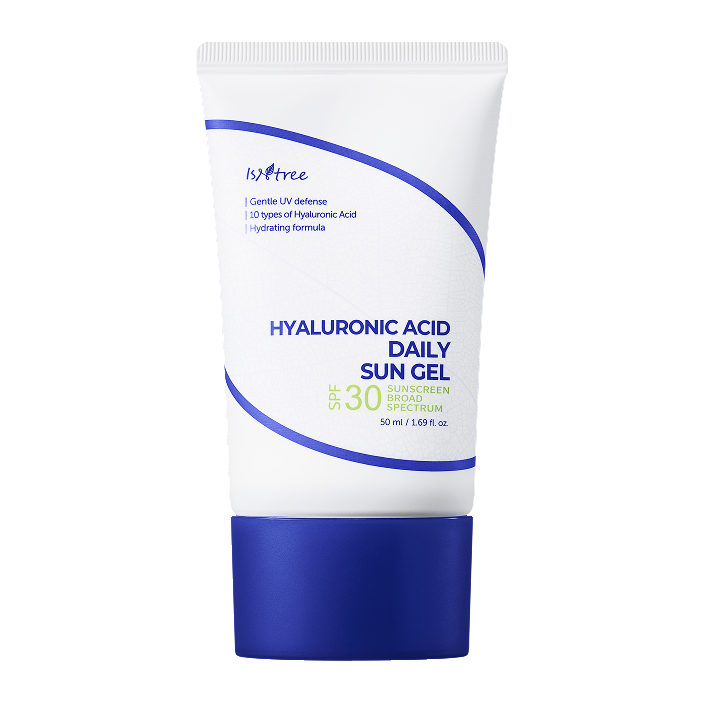
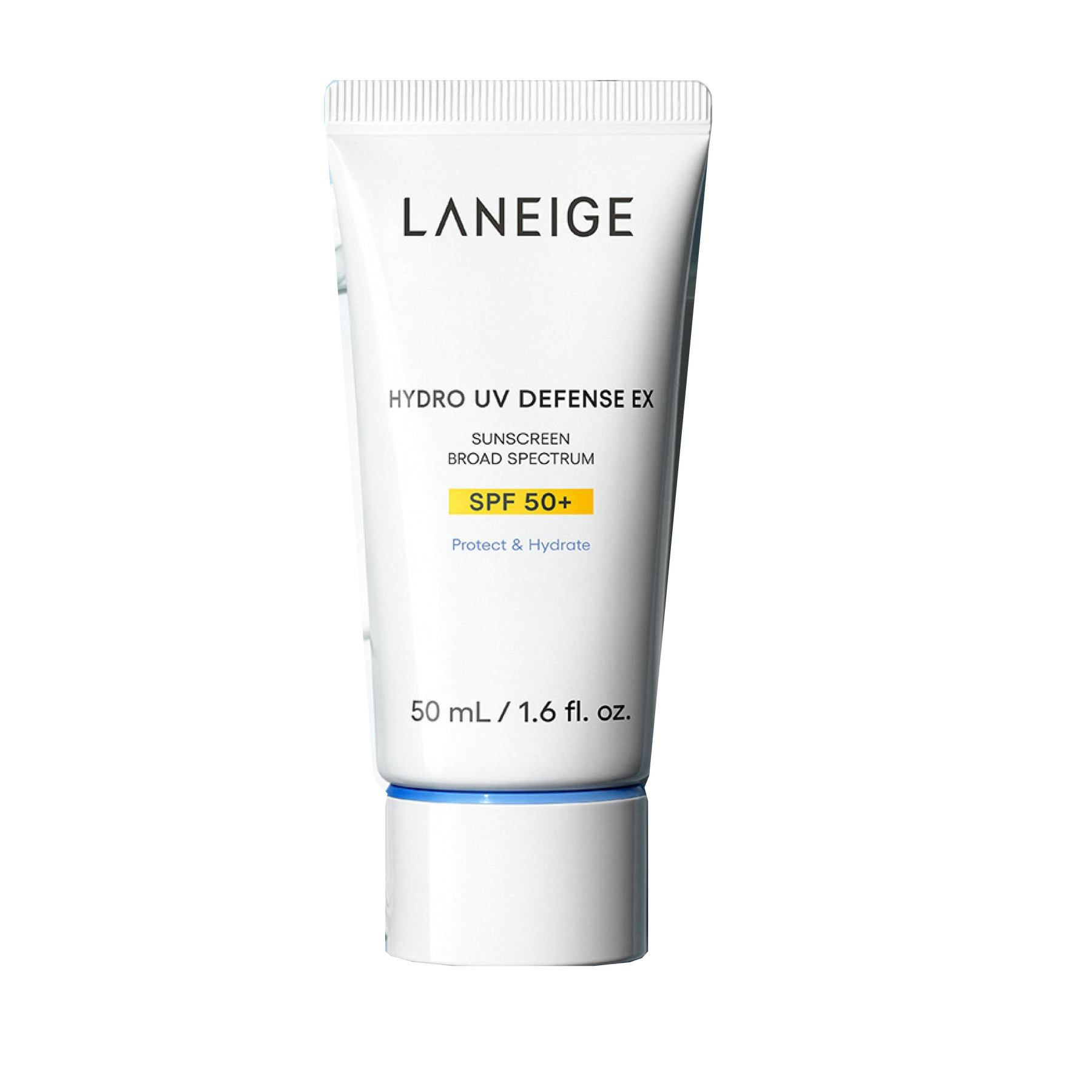
The U.S.-labeled Daily Sun Gel is a Broad Spectrum SPF 30 sunscreen in a 50mL tube. Its Drug Facts list avobenzone, homosalate and octisalate. It is a separate product from Hyaluronic Acid Watery Sun Gel SPF50+.
Consider it for: You want to identify Isntree’s U.S. SPF 30 version and read its UV-filter label before buying, rather than assume a Watery Sun Gel listing describes the same formula.
Based on brand information and published sources, not a hands-on review.
01 / TEXTURE
What the product photo shows
Brand description
A gel-type sunscreen according to the official store description. The verified product photograph shows a 50mL tube labeled Daily Sun Gel SPF 30; it is a packshot, not a dispensed swatch or a measured finish comparison.
03 / YOUR ROUTINE
How to apply and reapply this sunscreen
Official directions
Apply liberally 15 minutes before sun exposure and reapply at least every two hours, following the U.S. Drug Facts. Use a water-resistant sunscreen for swimming or sweating. The brand places it at the last skincare step. For children under six months, ask a doctor.
Avoid damaged or broken skin and keep out of eyes. Stop and ask a doctor if rash or irritation persists. The label directs swimming or sweating users to a water-resistant sunscreen; this page does not claim water resistance for Daily Sun Gel.
Daily Sun Gel SPF 30 is the product shown here. The official store says the separate Watery Sun Gel is unavailable through that store in the U.S. because of OTC regulations and points U.S. shoppers to Daily. Do not transfer the Watery product’s SPF50+ label or its UV-filter list to this tube.
What does the U.S. UV-filter label say?
The DailyMed label lists avobenzone 2.7%, homosalate 9% and octisalate 4.5% as sunscreen active ingredients. The current official-store formula names these as Butyl Methoxydibenzoylmethane, Homosalate and Ethylhexyl Salicylate. The label and store use different naming conventions; check the actual Drug Facts panel on the bottle you purchase.
Can you use it for swimming or sweating?
The U.S. directions say to use a water-resistant sunscreen when swimming or sweating. They do not give this product a forty- or eighty-minute water-resistance claim. For everyday outdoor exposure, the same directions call for liberal application before exposure and reapplication at least every two hours, alongside shade and protective clothing.
Selected ingredients · linked English product listing
Ingredient
Role or purpose
Formula detail
Avobenzone
Sunscreen active
2.7% · U.S. Drug Facts
Homosalate · octisalate
Sunscreen actives
9% · 4.5%
Hyaluronic acid forms · ectoin
Hydration-oriented ingredients
No hydration duration adopted from ingredient presence
Official ingredient list ↗. Ingredient roles explain the formula. See the sourced product information and evidence limits below.
BRAND-REPORTED EVIDENCE
Official formula and use information
Isntree official product information
Information
Published detail
Source context
UV-protection labeling
Broad Spectrum SPF 30
U.S. package / Drug Facts
Listed sunscreen actives
Avobenzone 2.7% · Homosalate 9% · Octisalate 4.5%
Current DailyMed label
Swimming / sweating instruction
Use a water-resistant sunscreen
No water-resistance time claimed
The U.S. Drug Facts establish the label directions and declared active ingredients. DailyMed lists labeling submitted by the packager; listing is not a claim of individual FDA product approval. The label does not provide a published comparative trial against Watery Sun Gel.
No. The official store had a sold-out notice when checked. Open the seller’s current page for availability; the product guide does not promise immediate stock.
Arrange the skincare products you have saved in My routine. Opening the tool does not add a product or change your order.
Your notes and saved routine stay in this browser. They are private records, not public reviews or a test of a product’s effects.
Products with overlapping ingredient lists
Calculations use complete ingredient lists for the stated market and product version. Listed names do not establish concentrations, equivalent effects or allergy suitability.
Explore products in the same use group with overlapping ingredient lists, then compare their texture, directions and ingredient differences.
How are candidates selected?
Candidates share the page’s language, market context and use group and have a complete ingredient list available. Names are normalized for spacing and reviewed synonyms; duplicate names count once.
The default order divides shared names by all distinct names across both lists: 10 shared names out of 20 distinct names gives 10 ÷ 20. You can instead order by the number of shared names. Up to five candidates are shown.
Ingredient overlap does not establish equivalent effects or a cheaper substitute. Concentrations, ingredient order, finished-product tests and feel are not part of this calculation. Missing lists are not treated as missing ingredients.