OUTDOORS / MAKEUP / LABEL DIRECTIONS
How to reapply sunscreen when makeup is already on
Plan the reapplication before a long outdoor day. Choose a sunscreen you can apply as directed, make time to use it again, and include shade, clothing and a hat. Keeping foundation untouched does not show that sun protection has been maintained.
A practical plan for an outdoor day
Start with a broad-spectrum sunscreen with SPF 30 or higher and water resistance, as AAD recommends. Apply it before going outdoors, following the exact label, and cover all exposed areas. A very thin layer chosen only to make foundation sit neatly is not the application to aim for.
When you need to reapply, step into shade or indoors if practical. Apply sunscreen to exposed skin in the amount and manner its directions require; touch up makeup afterward if you want to. This may disturb the makeup. The AAD and FDA guidance linked here does not establish a powder, brush, sponge or mist technique that preserves a finished makeup look while restoring the protection measured in an SPF test.
Sources: AAD: How to apply sunscreen · FDA: Sunscreen and sun protection
Compare the application method, not just the finish
A stick, spray or powder can be convenient to carry, but the amount and evenness of application still matter. AAD’s stick and spray advice below is general sunscreen guidance; it is not a test of those methods over foundation.
Scroll sideways to compare all columns on a small screen.
| Format | What to do and check |
|---|---|
| Lotion or cream | Use enough for all exposed skin and follow the label. Reapplying may change the makeup finish; a neat-looking thin layer does not measure protection. |
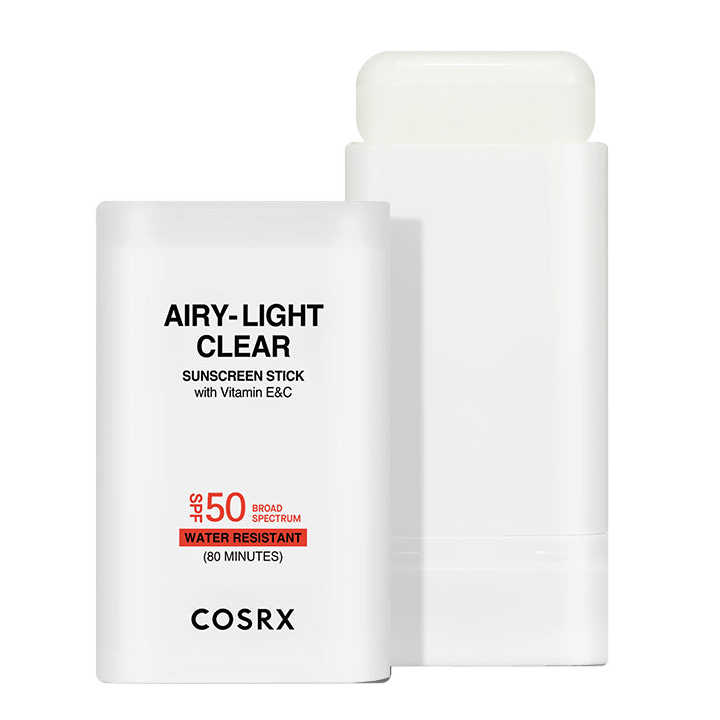
| Sunscreen stick | AAD advises four passes over each area, back and forth, then rubbing it in for an even layer. A single quick swipe over foundation is a different method. |
| Sunscreen spray | For the face, spray onto your hands first and then apply and rub it in. Avoid inhalation and spraying toward the face or mouth; follow the package’s fire and other safety warnings. |
| SPF makeup or powder | Check the exact product’s sun-protection directions. An SPF number does not tell you how much you applied; a quick dusting is not evidence of full, even sunscreen coverage. |
Sources: AAD: How to use stick and spray sunscreens · AAD: How to apply sunscreen · FDA: Sunscreen and sun protection
Two hours and 40/80 minutes answer different questions
While outdoors, AAD advises reapplying approximately every two hours and after swimming or sweating according to the bottle. Water resistance for 40 or 80 minutes is a tested swimming/sweating claim, not all-day protection. Read the label for those activities and towel drying; towel drying can call for immediate reapplication.
If the sunscreen rolls into flakes under makeup, review the other layers and application method. Keep the sunscreen’s labeled amount and directions while changing one optional step at a time. A smoother finish alone cannot establish that protection improved.
Sources: AAD: How to decode a sunscreen label · FDA: Sunscreen and sun protection
Sources and dates checked
- AAD: How to apply sunscreen ↗ · 2026-11-02
- AAD: How to use stick and spray sunscreens ↗ · 2026-11-02
- AAD: How to decode a sunscreen label ↗ · 2026-11-02
- FDA: Sunscreen and sun protection ↗ · 2026-11-02
“Made in Korea” does not identify the sales-market version
The manufacturing country and the version being sold answer different questions. Compare the complete product name, size, front label and ingredient or Drug Facts panel together. A familiar brand name or similar-colored tube is not enough.
| Detail | What to match |
|---|---|
| Exact name | The complete name, including words such as UV or Day Dew |
| Market label | For a U.S.-labeled sunscreen, read its Drug Facts active ingredients and directions |
| Size and packaging | The listed size, tube or other format, and the label shown by the seller |
| Use instructions | Application, reapplication, and any water-resistance time on that version |
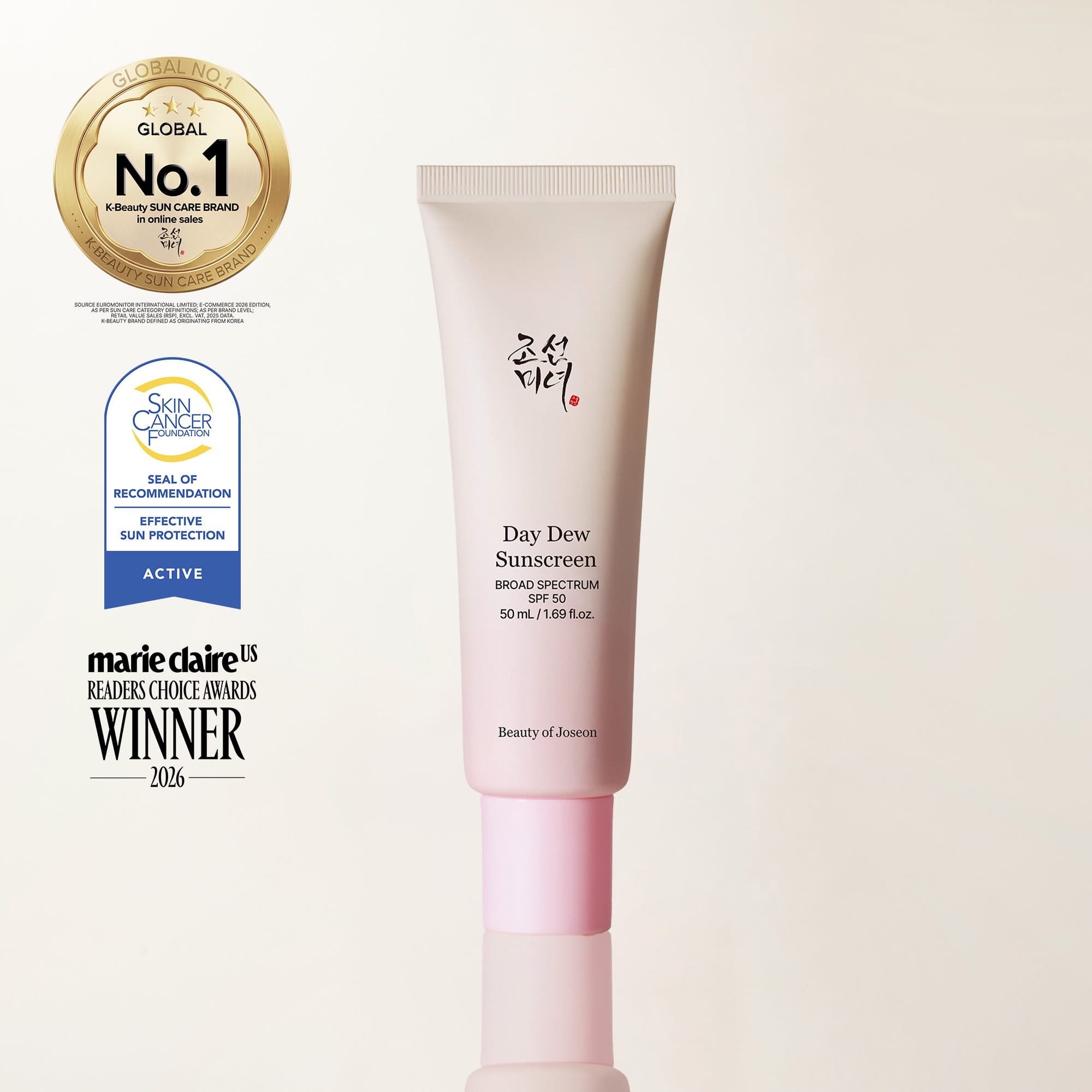
For example, Beauty of Joseon Day Dew Sunscreen is a named 50 mL listing in the U.S. product guide. Its facts belong to that product; they should not be copied to another Beauty of Joseon sunscreen simply because the brand is the same.
Beauty of Joseon · exact Day Dew product ↗ · FDA · reading and using sunscreen ↗
U.S. LABELS / 2026 UPDATE
Bemotrizinol and the 2026 US sunscreen changes
FDA’s 2026 final order added bemotrizinol to the US over-the-counter sunscreen monograph, at concentrations up to 6% and subject to the order’s other conditions. That expands the ingredient options under US rules. It does not establish that every imported sunscreen containing the ingredient meets those rules.
The finished product still has requirements for its SPF testing, ingredient combinations, dosage form and labeling, alongside other applicable OTC drug requirements. A Korean-market ingredient list is therefore a starting point for identifying the formula, not proof that the same product is marketed under US monograph conditions.
A separate September 2026 FDA action removed PABA and trolamine salicylate from the sunscreen monograph. FDA’s consumer explanation says it is not aware of sunscreen drug products currently sold in the US containing those ingredients and that consumers do not need to take action as a result of that announcement. Read the current product label and the specific update rather than treating all sunscreen news as the same change.
| What you see | What it tells you |
|---|---|
| Bemotrizinol in a Korean-market ingredient list | The ingredient is listed for that formula; check the market version and finished-product label. |
| A US Drug Facts label | Read the active ingredients, SPF, broad-spectrum and water-resistance statements, directions and warnings on the exact product. |
| News about a newly permitted filter | The regulatory conditions changed; it is not a blanket endorsement or approval of every finished sunscreen containing it. |
Sources checked November 2, 2026: FDA Final Administrative Order OTC000039 ↗ · FDA regulatory updates and consumer Q&A ↗ · FDA consumer sunscreen guide ↗
Start with the label, not a trend
Check the exact package or official US page for SPF, broad-spectrum language, directions and warnings. The seller’s live listing and package for your market take priority if wording differs from an older review or social post.
Choose the finish you are willing to wear
Marieclat’s current examples include a cream, a serum-like formula and a soft-matte finish. These are brand-described formats, not a promise about shine, irritation or how a formula will look on every person.
Reapplication belongs in the plan
Read the directions for the exact product, including when and how it should be reapplied. A practical choice is one whose texture, size and routine fit make it easier for you to follow those directions.
Check the seller before you leave Marieclat
Use the official product page and a verified US seller as starting points. Price, stock, shipping, formula version and promotions can change, so confirm each detail at checkout.
A few useful answers
Can a sunscreen also be a moisturizer?
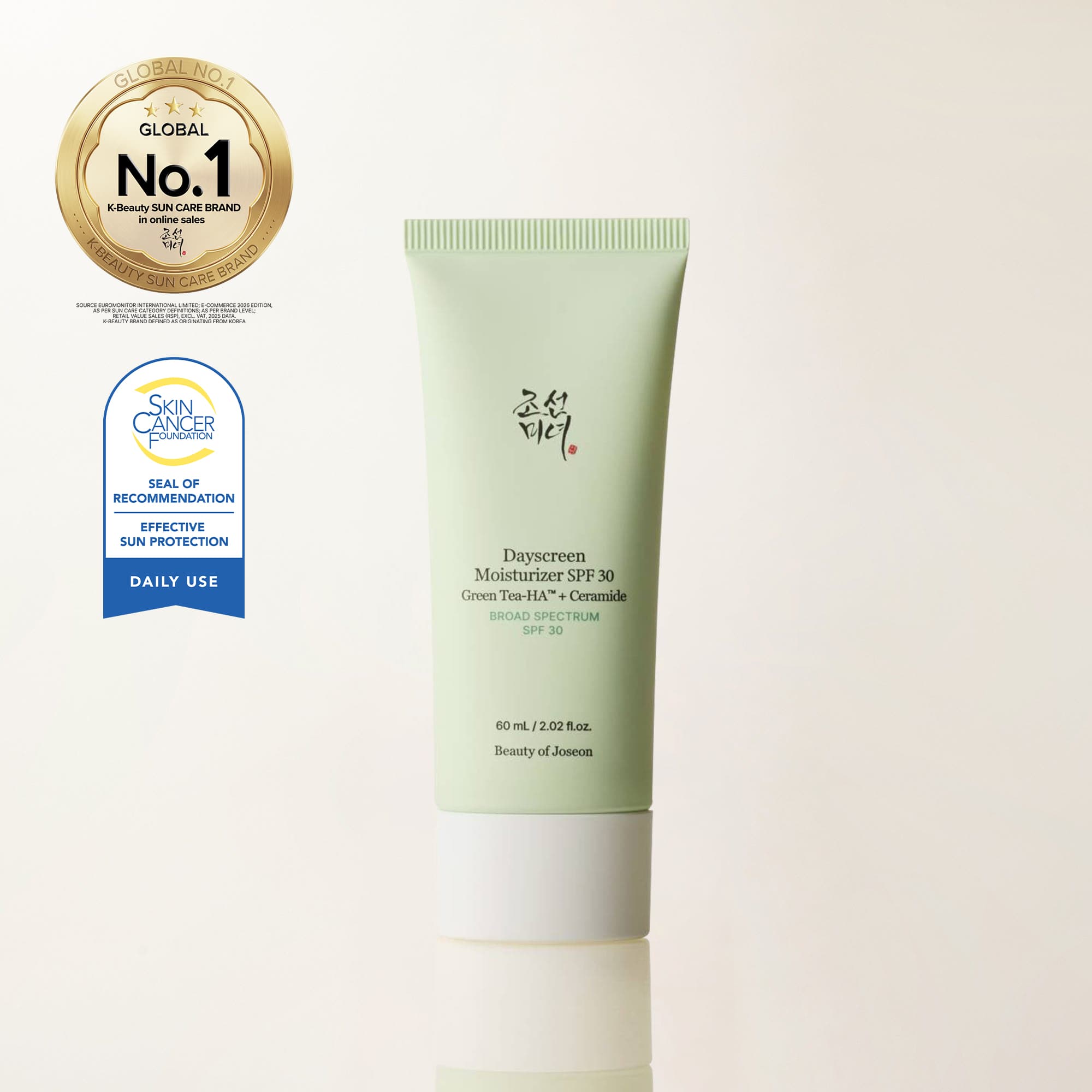
Yes. FDA recognizes moisturizers with sunscreen as products that can be both cosmetics and drugs. Whether you want a separate moisturizer depends on the formula and your routine. Use the sunscreen in the amount and manner its label requires.
Which finish is best for oily or dry skin?
There is no universal answer. Compare the brand-described finish and the routine you will actually follow; do not treat a finish word as a diagnosis.
Does a Korean sunscreen avoid white cast for everyone?
Do not assume that. Appearance depends on the product, amount, application and individual skin tone.
Does the 2026 bemotrizinol change mean every Korean sunscreen is approved for the US?
No. The FDA order adds bemotrizinol to the US OTC monograph at up to 6% under specified conditions. Finished products must also meet applicable requirements. Compare the exact sales-market version, Drug Facts label and directions; an ingredient appearing on a Korean label does not establish the product’s US status.
Can I spray sunscreen directly over makeup on my face?
Do not spray toward your face. AAD advises spraying onto your hands first, then applying to the face and rubbing it in. This general method does not establish that makeup will stay intact or that a light facial mist gives full sunscreen coverage.
Does water resistance for 80 minutes mean I can skip two-hour reapplication?
No. The 40- or 80-minute claim concerns swimming or sweating. Follow the exact package for those activities and towel drying, and reapply as directed during outdoor exposure.
Which Korean sunscreen format suits oily or acne-prone skin?
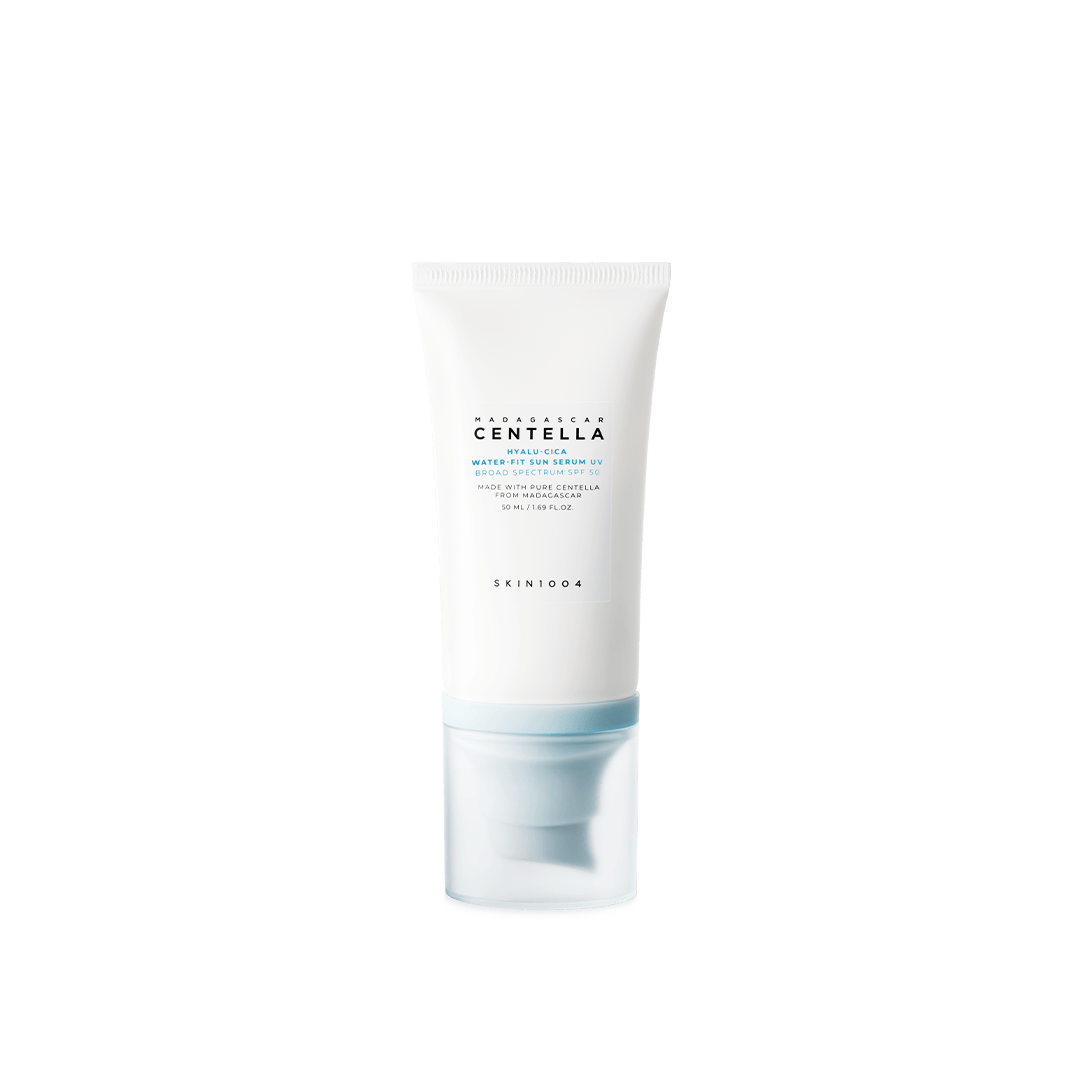
Start with the label checks above, then compare each product’s described texture and finish. A format name alone does not establish how light a formula will feel. A “non-comedogenic” statement is a brand claim about that formula, not a guarantee about your skin. The sun serum below is one light-format example.
SKIN1004 Hyalu-Cica Water-Fit Sun Serum UV — a serum-format example ↗
What if my skin is sensitive, or I have rosacea?
This guide does not choose products for rosacea — it is a medical condition, and product tolerance is personal. What you can check on any label: the UV filters used (mineral formulas list zinc oxide and/or titanium dioxide), added fragrance, and the directions. A mineral-filter label does not guarantee that a formula will suit you. Follow the AAD’s general advice to test a new product on a small area before regular use. For rosacea-specific choices, the AAD overview is a safer starting point than a product list.
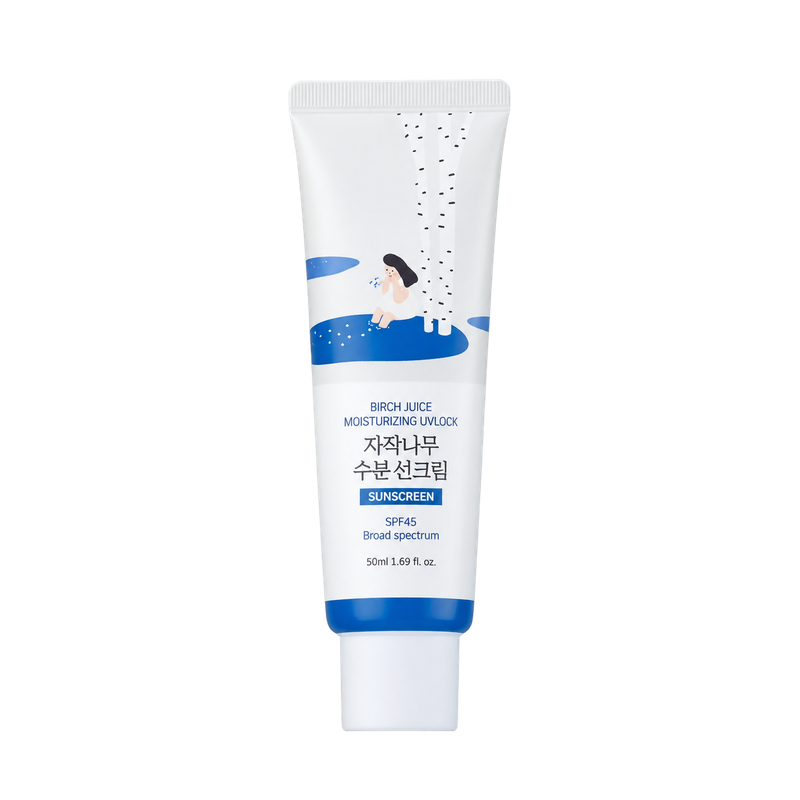
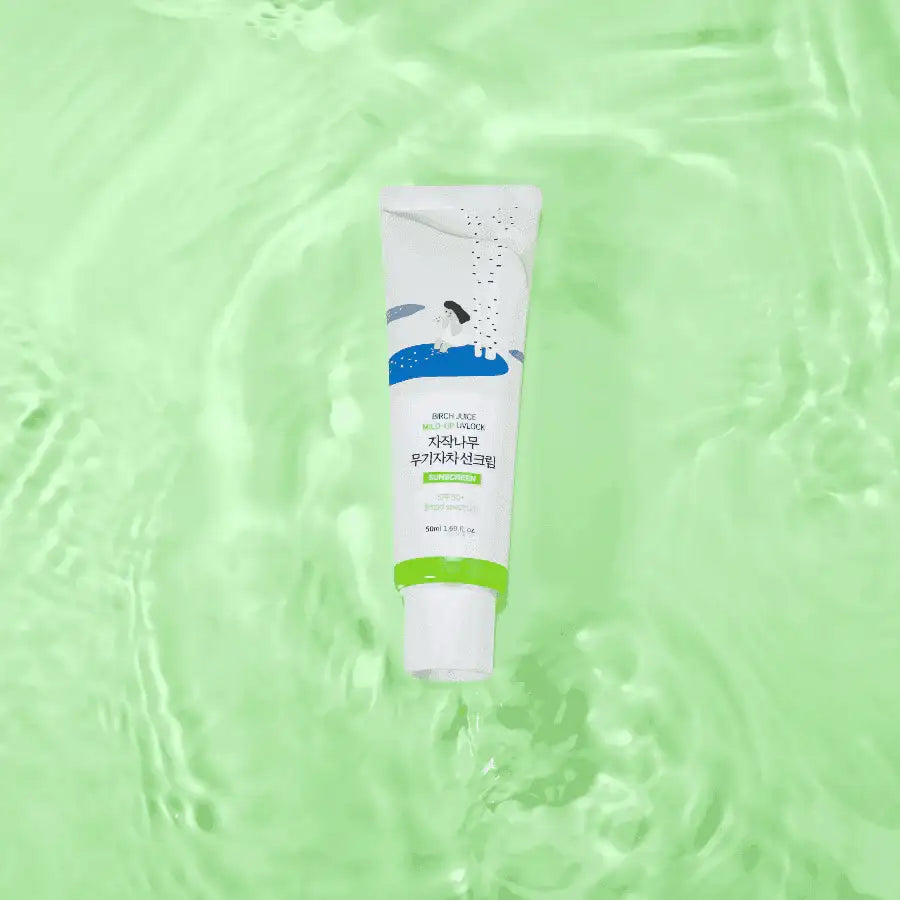
AAD: Rosacea overview ↗ROUND LAB Birch Mild-Up Sunscreen UVLock — a mineral lotion example ↗
What about dry or mature skin?
Start with broad-spectrum protection and the SPF on the exact US package, then compare the texture you prefer. A cream-format sunscreen is one option, but the format alone does not predict comfort. A moisturizer with sunscreen can combine both jobs: the AAD advises choosing broad-spectrum SPF 30 or higher and following the reapplication directions. If you use separate products, follow their own directions rather than mixing them together. The linked product is a cream-format example, not a guarantee of suitability for dry or mature skin.
AAD: simple routines and moisturizer with sunscreen ↗Beauty of Joseon Day Dew Sunscreen SPF 50 — a cream-format example ↗
Will a Korean sunscreen leave a white cast on deeper skin tones?
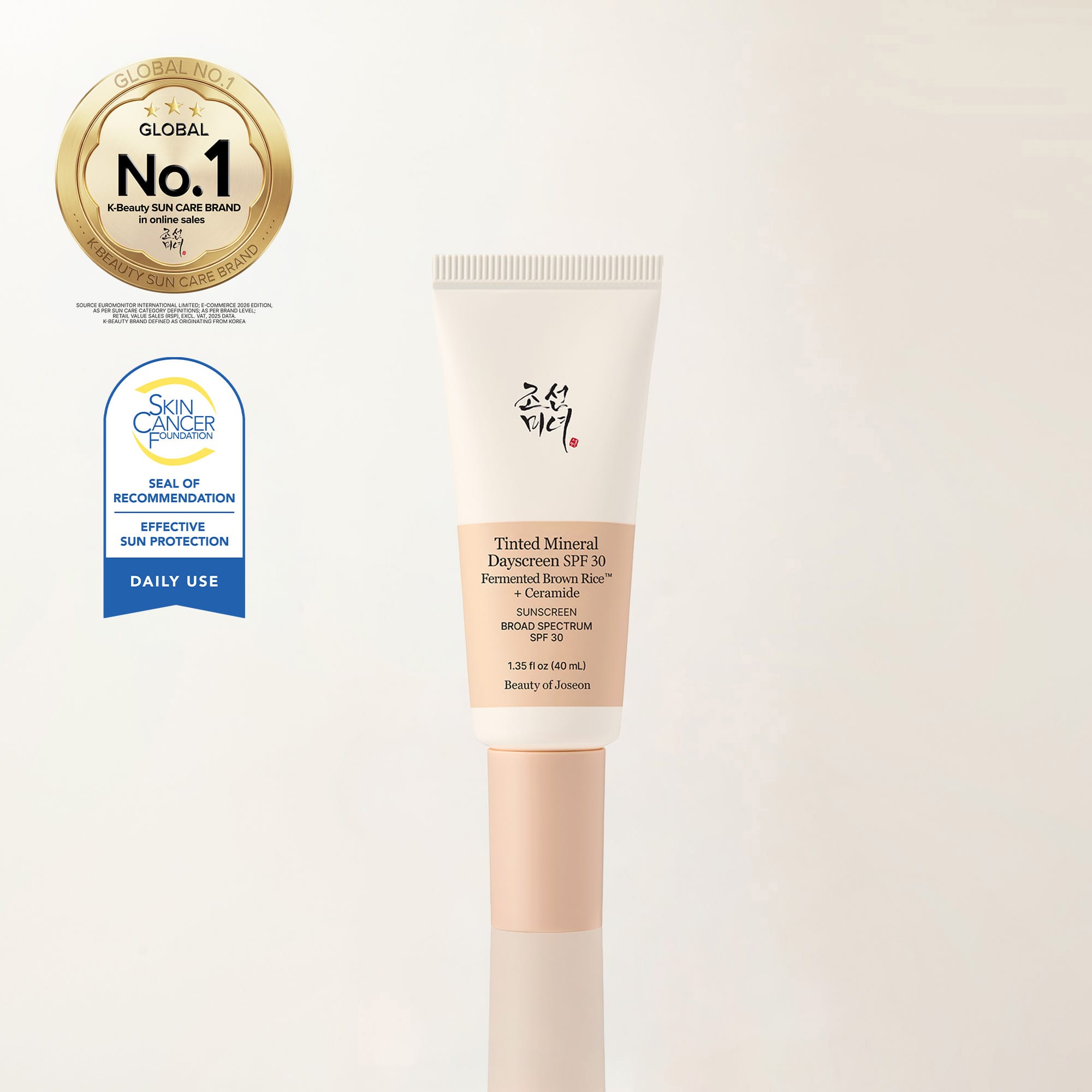
It depends on the formula. Mineral sunscreens — especially untinted ones — are the most likely to leave a visible cast, and the amount applied matters. A tinted mineral formula is one way brands address this; appearance still varies by shade match and application, so check the exact product’s description and shade information rather than assuming from the word “Korean.”
Beauty of Joseon Tinted Mineral Dayscreen SPF 30 — a tinted mineral example ↗
Sources
- U.S. Food and Drug Administration: sunscreen basics ↗
- American Academy of Dermatology: choosing sunscreen ↗
- FDA · bemotrizinol final administrative order OTC000039 (2026) ↗
- FDA · 2026 sunscreen regulatory actions and consumer Q&A ↗
- FDA · moisturizers with sun-protection claims can be both cosmetics and drugs ↗